


The park host's classic mistake
You load up the car, claim the best picnic table, and feel like a hero — right up until someone asks "wait, where's the bag the pieces go in?" It's still on your porch. The game is technically there, but playable? Barely.
Hosting games outside your own backyard is a different skill than hosting in it. At home, you can run inside for a missing piece, grab a chair from the garage, or pull up the rules on your phone. At a park, you've got whatever you packed and nothing else. So let's get you packed right.
Start with the game itself — but choose it carefully
Not every backyard game is a good park game. Before you throw anything in the trunk, ask yourself three questions:
- Does it need a flat, hard surface? Tabletop games like dominoes or giant tumbling block sets need level ground. Grass works fine for most, but uneven terrain or a slope will frustrate players fast. Scope out your spot before you commit to a game that depends on physics.
- How many pieces does it have? More pieces mean more chances to lose one in the grass. Games with a handful of large components (washers, ladder toss bolas, giant dice) are far friendlier than anything with small parts that blend into a lawn.
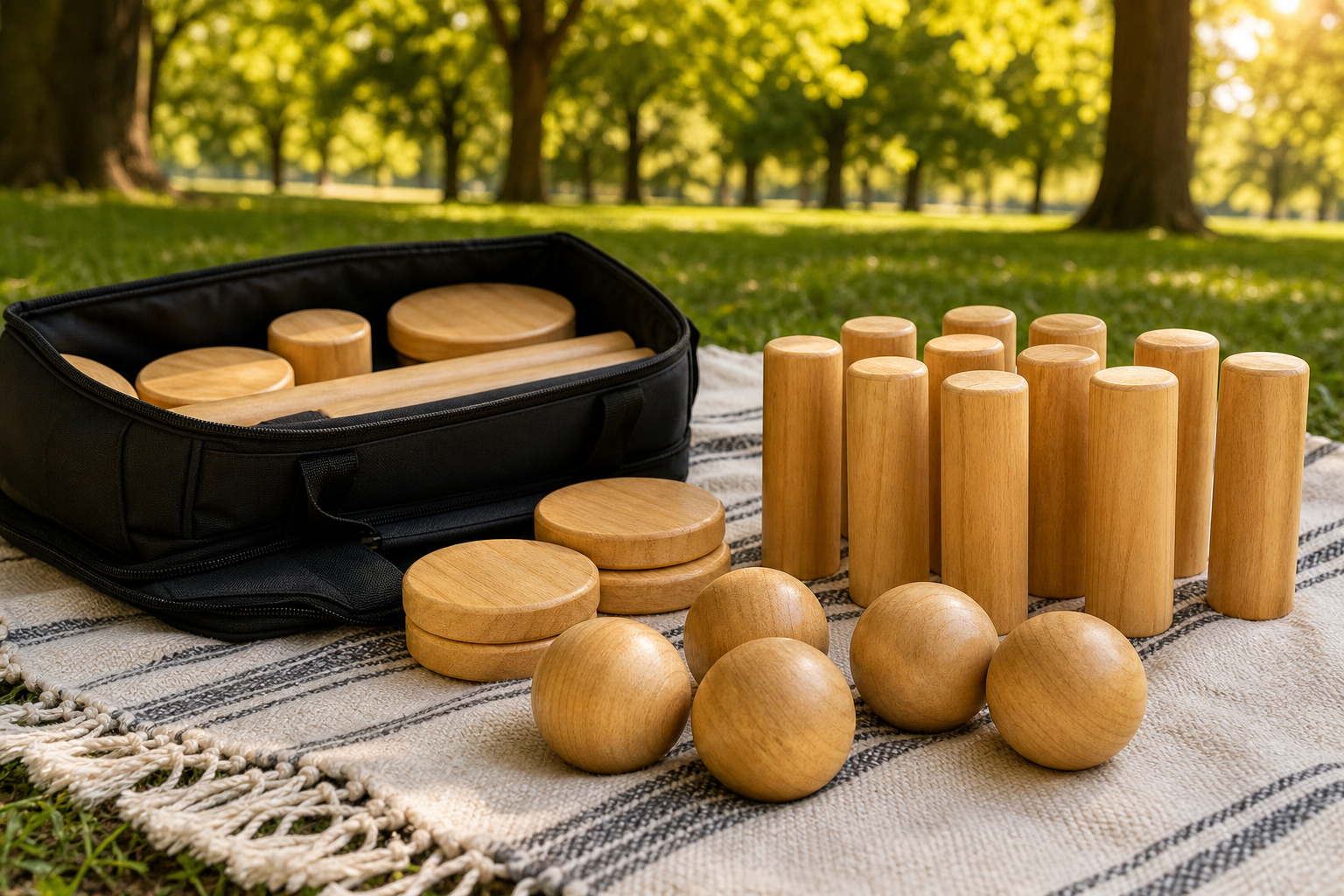
- Does it come with its own carrying solution? If you're stuffing pieces into a grocery bag, you've already made the day harder than it needs to be. Look for sets that include a carry bag or compact storage — it's the difference between a clean setup and a chaotic scramble at the end of the day.
Games that genuinely travel well: ladder toss, washer toss, 4-in-a-row, and giant dice games. They're self-contained, the pieces are large enough to find in the grass, and setup takes minutes. Bolaball's outdoor sets are built with exactly this kind of portability in mind — solid wood, compact when broken down, and easy to carry from car to field.
The checklist nobody thinks to make
Beyond the game itself, here's what the experienced park host brings — and what the first-timer always leaves behind.
The stuff people forget
- The carrying bag. Sounds obvious. Gets left on the porch constantly. Before you leave, physically put the bag in the car first, then the game pieces.
- A printed (or screenshot) copy of the rules. Cell service at parks is unreliable, and someone will dispute a ruling. A quick screenshot of the official rules saves twenty minutes of arguing.
- A tiebreaker plan. Decide before you go how you're settling ties. "We'll figure it out" is how grudges start at family reunions.
- Extra scoring markers or chalk. If your game uses score tracking, bring something to write with. A stick in the dirt works in a pinch, but a piece of chalk on pavement is a lot cleaner.
- A small broom or brush. Grass clippings and dirt find their way into wooden game pieces. A cheap pastry brush keeps things clean and makes packing up faster.
The stuff that makes the day actually comfortable
- A shade plan. Shade at a park is first-come, first-served. If your group is big, bring a pop-up canopy or at least an umbrella. Nobody plays their best game squinting into direct sun.
- A blanket or tarp. Even if the grass looks dry, a blanket under the game keeps pieces from rolling into wet patches and gives you a defined play area.
- A bag for trash. Parks don't always have bins nearby, and game hosts who leave a mess behind don't get invited back.
- Water. Obvious, but this is the one everyone delegates to someone else and then nobody brings enough of.
The surface question (it matters more than you think)
Washer toss and ladder toss can be set up on grass, gravel, or packed dirt — they're flexible. But if you're bringing a giant tumbling block set, you want the flattest surface you can find. A slight slope doesn't just look awkward; it changes the physics of the game and makes the tower fall in one predictable direction, which kills the tension fast.
If you're scouting a park you haven't been to before, walk the area first. Picnic table zones are usually the flattest. Open lawn areas can have subtle dips. Pavement near a pavilion is often your best bet for any game that needs a stable base.
Games that are better left in the backyard
Some games are genuinely great — just not great for travel. A few categories to leave home:
- Anything with lots of small pieces. If a piece rolls under a park bench or disappears into long grass, your game is done. Save those sets for the backyard where you can find things.
- Games that need a table you're not bringing. Some indoor-outdoor games assume a flat, stable surface at a specific height. If the park doesn't have picnic tables available, you're improvising in a way the game wasn't designed for.
- Very long setup games. At a park, you'll spend more time managing logistics — parking, finding a spot, keeping an eye on kids — than you would at home. Games that take fifteen minutes to set up will eat into actual play time.
One last thing before you load the car
Do a two-minute "game audit" the night before. Open the box, count the pieces, confirm the carry bag is inside, and check that you have everything the rules call for. It takes less time than driving back home for a missing washer. And honestly? The host who shows up prepared is the host everyone wants to invite to the next one.
Browse portable outdoor game sets at bolaball.com — built for exactly this kind of day out, with durable solid wood construction and storage that actually travels.
Frequently Asked Questions
What outdoor games work best on uneven grass?
Games that don't depend on a level surface are your best bet on uneven grass. Ladder toss, washer toss, and giant dice games all tolerate a bit of terrain variation because the gameplay isn't affected by a slight slope. Avoid tumbling block sets or anything that stacks — they need the flattest ground you can find.
How do I keep track of small game pieces at a park?
Choose games with large, easy-to-spot components — think giant wooden dice, oversized washers, or big bolas rather than small tokens or cards. Before you pack up to leave, do a sweep of the play area and count pieces against the game's inventory list. Keeping a designated bag just for pieces (not mixed with food or gear) also helps a lot.
Can lawn games be played on concrete or pavement at a park?
Most lawn games adapt just fine to pavement or packed surfaces — and for games that need a flat base, like tumbling blocks, a smooth concrete area near a pavilion is actually better than uneven grass. Just be mindful that hard surfaces can wear down wooden pieces faster over time, so avoid dragging them and store them properly after play.
How many games should I bring for a group outing?
One or two games is usually the sweet spot. More than that and you'll spend more time managing options than actually playing. Pick one active game (like ladder toss or washer toss) and one that works well at a table (like giant dominoes or 4-in-a-row) to give the group variety without overwhelming the setup.