


The afternoon starts great. Everyone's outside, someone's running around, and you're feeling like a genuinely good parent. Then, about twenty minutes in, the energy drops. Someone wanders off. Another kid asks for a tablet. The whole thing quietly collapses, and you're left wondering what went wrong.
Nothing went wrong, exactly. The problem is structural: one game, no sequence, no plan for what comes next. Screen-free afternoons don't fail because kids can't handle being offline — they fail because outdoor play without a loose structure runs out of steam fast, especially with mixed ages.
Here's how to build an afternoon that actually holds together.
Start with the energy, not the game
Before you pick a single activity, think about where kids are when they first come outside. After lunch or a morning of sitting, they're usually restless and a little chaotic. That's not a problem — that's useful. Lead with something that burns it off.
High-movement games work best here: relay races, a quick round of tag, or anything that gets everyone running. Don't overthink it. The goal at this stage isn't a polished game — it's releasing the pent-up energy so kids can actually focus on something more structured afterward.
Fifteen to twenty minutes of this is usually enough. You'll notice the shift: they slow down, start talking to each other, and become more interested in something with actual rules.
Move into the middle layer: games with just enough structure
This is the heart of the afternoon, and it's where most parents either nail it or lose the group entirely. The sweet spot is a game that has clear rules and a winner, but doesn't require a lot of setup or explanation.
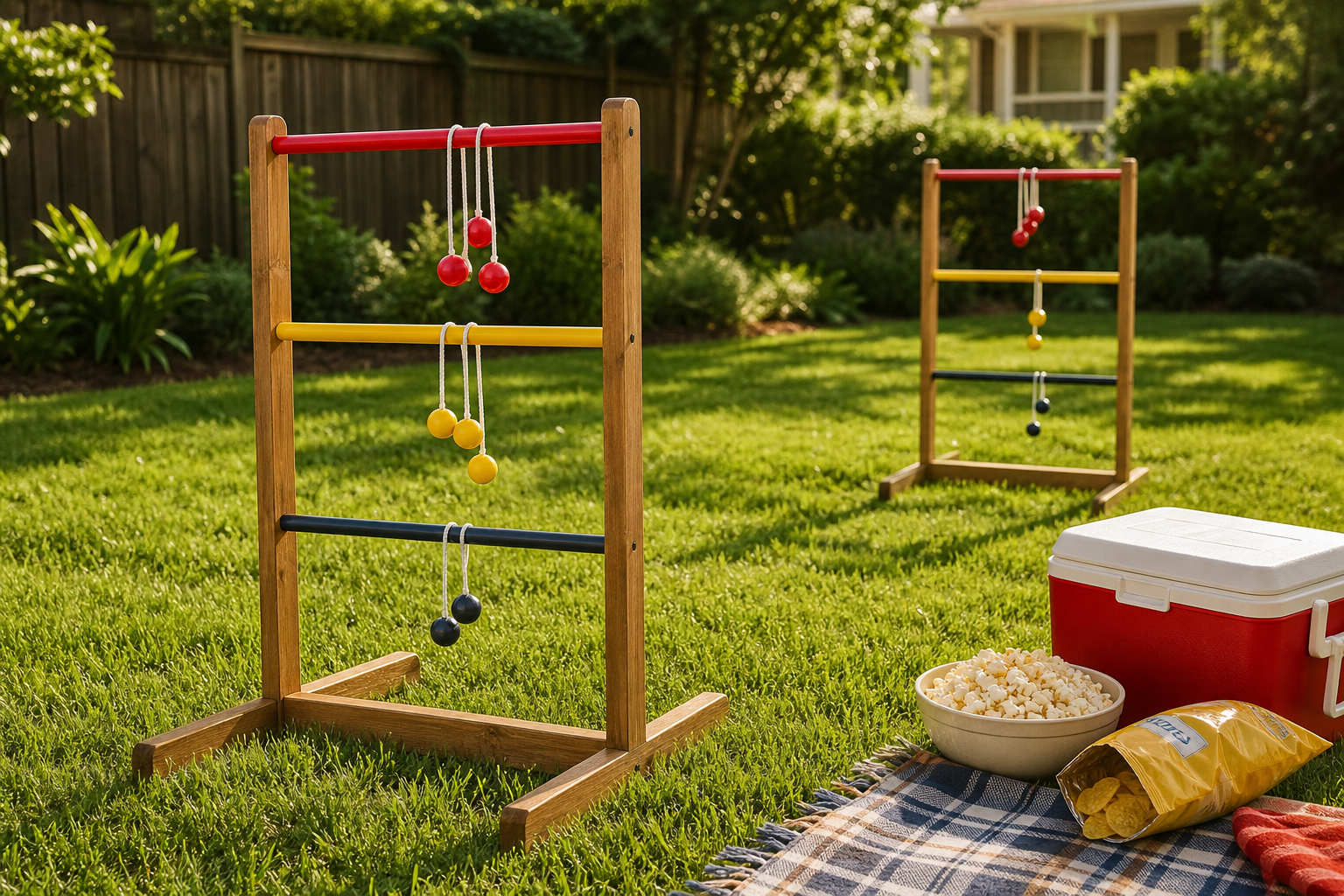
Lawn games are ideal here — things like ladder toss, washer toss, or giant tumbling blocks. They're competitive enough to hold attention, but relaxed enough that a six-year-old and a twelve-year-old can play together without the older kid being bored or the younger one being lost. That cross-age playability matters more than almost anything else when you're managing a mixed group.
One practical tip: pair kids intentionally. Put a younger child on a team with an older one instead of separating by age. It keeps the younger kids engaged (they're not just losing to bigger kids) and gives older kids a low-key leadership role they usually rise to without being asked.
Plan for two or three rounds of this kind of game, not just one. The first round is always a little chaotic as everyone figures out the rules. The second round is when it actually gets fun.
Read the room around the 90-minute mark
Here's where most screen-free afternoons silently fall apart: the structured game ends, no one knows what's next, and the group fractures. Someone drifts. Someone checks a phone. The afternoon is technically still happening, but it's over in spirit.
Watch for the signs around the 90-minute mark — restlessness, side conversations, kids starting to wander. That's not boredom with being outside; that's a gap in the plan. Your job is to fill it before it opens.
Have a transition activity ready. Something lower-stakes and more social: a giant dominoes set, a round of outdoor dice games, or even just a simple team challenge you make up on the spot. The point isn't the specific activity — it's that something new starts before the energy fully drains. Momentum is much easier to maintain than it is to restart.
Wind down with something everyone can do at once
By mid-to-late afternoon, energy levels are genuinely lower and that's fine. Fighting it backfires. Instead, shift to something that works when kids are a little tired: a slower-paced game, a free-play period with loose rules, or a big group game where sitting on the sideline for a turn is perfectly acceptable.
Giant 4-in-a-row, dominoes, or a casual dice game work well here because they're easy to drop in and out of. Younger kids can wander and come back. Older kids can play more seriously if they want. The afternoon ends on a natural note rather than a forced one.
The part most guides skip: snacks as a reset button
A snack break isn't a concession to the kids — it's a deliberate pacing tool. Dropping a snack in between the high-energy opener and the structured middle game gives everyone a moment to regroup, rehydrate, and actually look forward to what's next. It also gives you a natural moment to introduce the next activity so it doesn't feel like a surprise or a chore.
Keep it simple. The snack isn't the point; the transition is.
A rough sequence that actually works
- First 20 minutes: High-energy, low-rules movement. Tag, relay races, free running.
- Next 45–60 minutes: Structured lawn game with teams. Two to three rounds minimum.
- Snack break: Natural pause, introduce the next activity while everyone's together.
- Next 30–45 minutes: A second game, lower intensity, more social. Tumbling blocks, dominoes, dice games.
- Final stretch: Free play or a slow group game. Let it wind down naturally.
You don't need to announce this schedule to the kids. Just know it yourself and steer gently when transitions need to happen. The structure is for you, not them.
If you want a starting point for the lawn game portion, Bolaball's 5 outdoor dice games you can play with a set of giant wooden dice is a solid reference — easy to learn, easy to adapt for different ages, and genuinely replayable across the afternoon.
The screen-free afternoon isn't about willpower or keeping kids away from devices. It's about giving them something worth staying for. A little planning goes a long way toward making outside feel like the obvious choice.
Browse Bolaball's outdoor game collection to find games that work for every age in your crew — from the five-year-old who wants to be involved to the teenager who claims they're not interested (until the game starts).
Frequently Asked Questions
How do you keep kids of very different ages playing together without older kids getting frustrated?
The key is choosing games where skill matters less than strategy or luck — things like tumbling blocks, dominoes, or toss games where a younger kid can genuinely compete. Pairing mixed ages on the same team also helps: older kids feel useful rather than held back, and younger kids stay in the game instead of just watching.
What do you do when kids say they're bored even with games set up?
"I'm bored" usually means "I don't know what to do next" — not that there's nothing to do. The fix is almost always a transition: introduce a new game, change the teams, or add a small challenge to the existing one. Boredom during outdoor play is almost always a gap in momentum, not a lack of options.
How many games do you actually need for a full afternoon?
Two or three solid games is usually enough, especially if you play multiple rounds of each. Variety helps, but constantly switching activities is actually more disruptive than staying with one game long enough for kids to get good at it. The second and third rounds of a game are almost always more fun than the first.
Are lawn games suitable for really young kids, like ages 4–5?
Most classic lawn games can be adapted for younger kids by adjusting the distance, simplifying the scoring, or pairing them with an older player. Games like giant tumbling blocks or oversized dominoes tend to work especially well for younger children because the pieces are easy to handle and the rules are simple to grasp. The goal at that age is participation, not competition.