


Every parent has bought a lawn game that got played hard for exactly one afternoon, then slowly migrated to the back of the garage. Ring toss is a classic offender. It looks perfect — simple, compact, cheap — and then twenty minutes in, the kids have wandered off and you're left wondering what happened.
Cornhole doesn't have that problem as often. There's something about the size of the boards, the back-and-forth team format, and the way scoring actually builds tension that keeps both kids and adults locked in. But is it actually the better pick for your family? Let's compare them honestly.
The First Five Minutes vs. The Next Two Hours
Ring toss wins the first impression. The setup is nearly instant, the rules take ten seconds to explain, and younger kids get that immediate dopamine hit when a ring lands cleanly. That's genuinely fun.
The problem is the ceiling. Once a kid figures out the right toss angle, the game stops teaching them anything new. There's no team dynamic, no comeback mechanic, no reason to keep score past the first round. For kids roughly six and under, that's fine — novelty is enough. For anyone older, the interest drops off fast.
Cornhole has a slower warm-up but a much longer arc. The hole is a real target that takes genuine practice to hit consistently, the bean bags slide and knock each other off the board in ways that create drama, and the cancellation scoring system means a game is never truly over until it's over. Kids who are old enough to care about winning — usually around age five or six and up — tend to stay invested in a way ring toss just doesn't sustain.
Age-by-Age Reality Check
Ages 3–5
Honestly? Either game works at this age, and neither will hold attention for long regardless. Ring toss has a slight edge here purely because the toss distance can be shortened to almost nothing. That said, toddlers love throwing bean bags too, and cornhole boards are big enough that even a wild toss occasionally lands on the board — which feels like a win.
Ages 6–10
This is where cornhole pulls ahead clearly. Kids this age can understand the scoring, care about competing, and have the coordination to make real progress. The team format — two players per side — also means they're not playing alone or waiting forever for a turn. Ring toss at this age tends to feel either too easy (once they crack the technique) or frustrating if the pegs are set far apart.
Ages 11 and Up
Teenagers will play cornhole at a BBQ. They will not play ring toss. That's not an opinion — it's just what happens at every family gathering. Cornhole has enough skill ceiling and enough social energy (trash talk, close games, rematches) to hold older kids and adults alike. Ring toss becomes a toddler game in their eyes the moment they hit middle school.
Setup, Storage, and the "Will We Actually Use This?" Test
Ring toss wins on footprint. A basic set packs into almost nothing and takes up zero storage space. If you're in an apartment or have a tiny yard, that matters.
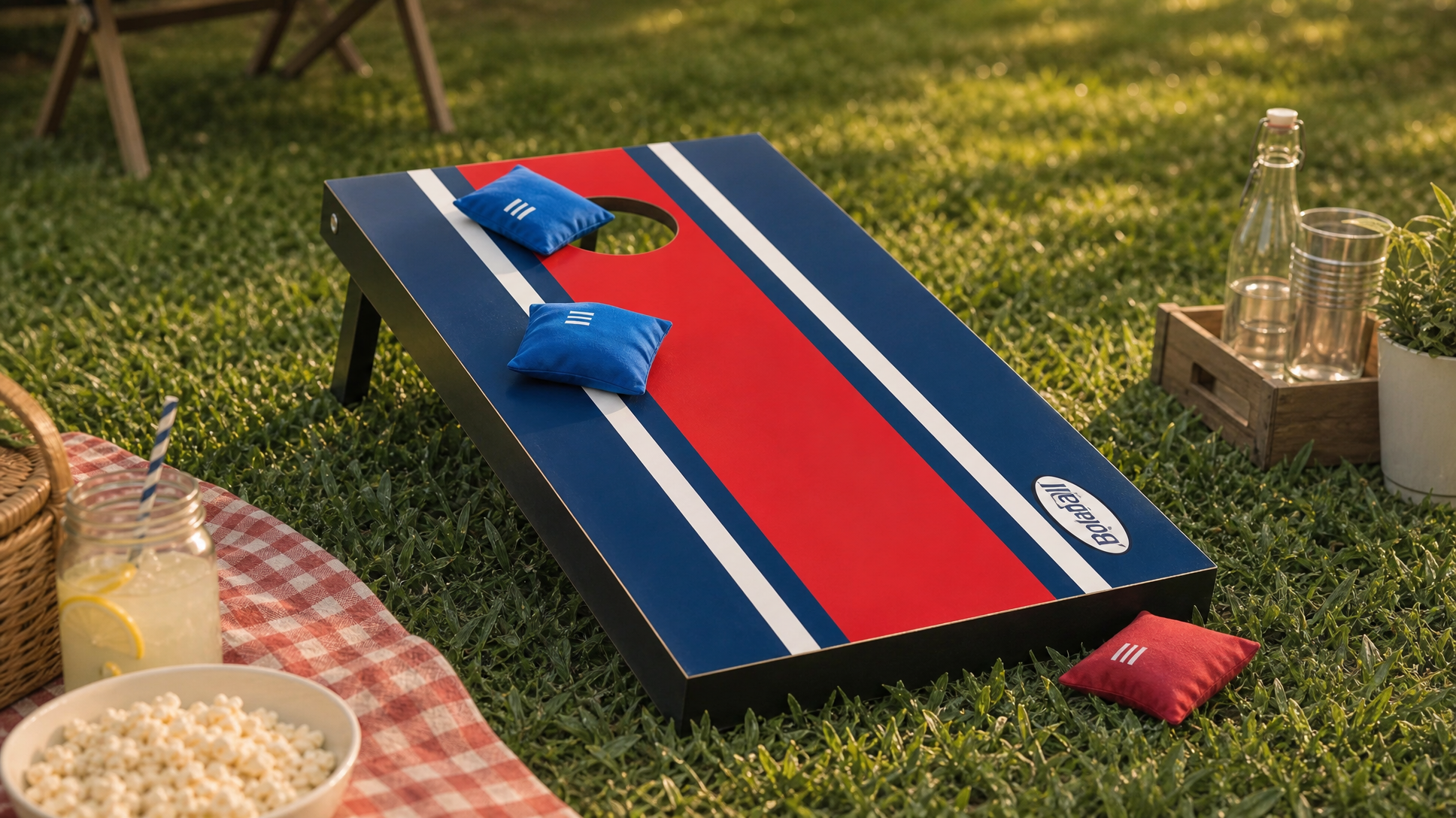
Cornhole requires more room — you need a reasonable stretch of flat ground to set the two boards at proper playing distance — and the boards themselves are a real object that needs a home. The Bolaball Cornhole Board Set addresses the storage side well: the legs fold flat and the whole set comes with a carrying bag, so it's genuinely portable rather than just technically movable. The boards are 2x3 ft solid wood, which means they're sturdy enough to last, and the carrying bag means you can actually get them to the park or a tailgate without a production.
The honest trade-off: if you have the space, cornhole earns its footprint because it actually gets used repeatedly. Ring toss often gets used twice and then forgotten. A game that takes up more room but gets pulled out every weekend beats a compact game that collects dust.
What the Scoring System Does for Kids
This is underrated. Ring toss typically works on a simple points-per-ring system with no real tension — whoever gets the most rings wins, end of story. There's no comeback mechanism, no strategy, no moment where the game pivots.
Cornhole uses cancellation scoring: each team's points cancel out the other's, so a great round by one team can be completely neutralized. A player who's been losing can suddenly bring their team back with two bags in the hole. That structure creates genuine drama, and kids respond to it — they stay at the board because they believe they can still win. That belief is what keeps a game going past the first ten minutes.
The Honest Verdict
Ring toss is a fine impulse buy for very young kids or a quick carnival-style activity. It's not a bad game — it's just a shallow one. It does one thing well and stops there.
Cornhole is the game that's still on your patio in five years. It grows with your kids, works for adults, travels easily, and generates the kind of loud, competitive, laughing energy that makes a backyard gathering actually feel like one. The Bolaball Cornhole Board Set — with its solid wood construction, foldable legs, red, white, and blue stripe design, and included carrying bag — is built to be that kind of long-haul game rather than a one-season novelty.
If you're buying one outdoor game that the whole family will still be reaching for years from now, cornhole is the answer. Check out the Bolaball Cornhole Board Set and see why it's the one that actually stays in rotation.
Frequently Asked Questions
What age is cornhole appropriate for?
Most kids can enjoy cornhole from around age five or six, when they have enough arm coordination to toss a bean bag underhand and enough focus to follow a simple scoring system. Younger children can still join in casually — the boards are large enough that even imprecise throws land somewhere interesting — but the competitive format really clicks around school age and up.
How far apart should cornhole boards be set up?
Official tournament distance places the boards 27 feet apart (measured from the front edge of one board to the front edge of the other), but for casual family play — especially with younger kids — you can move them closer to whatever distance keeps the game fun and competitive. There's no rule that says you have to play at full distance in the backyard.
Can you play cornhole indoors?
Yes, with enough floor space. The Bolaball Cornhole Board Set is designed for both indoor and outdoor play. A long hallway, a finished basement, or a large living room can all work — just shorten the distance between boards to fit the space. Bean bags are soft enough that they're unlikely to cause damage if a toss goes wide.
Is cornhole hard to learn for kids who've never played?
Not at all — it's one of the easiest lawn games to pick up. The basic rule is simple: toss the bag onto the board for one point, or through the hole for three. Kids usually grasp the concept in a single round. Getting consistently accurate takes practice, which is exactly what keeps them coming back.