


Most outdoor toys have a shelf life measured in seasons. The plastic ring toss gets cracked by September. The foam dart set loses half its darts by July. And whatever battery-powered thing was a hit at the birthday party? Forgotten by fall. Cornhole is different — and if you haven't thought of it as a kids' game, you're missing the most obvious thing about it.
Why Cornhole Works for Young Kids Right Away
The whole game is: throw a bag, try to land it on the board or through the hole. That's it. There's no reading required, no complicated setup, no rules to memorize before anyone can start having fun. A five-year-old gets it in about thirty seconds.
What makes it genuinely work for young children — not just tolerable for them — is that success is immediately visible and satisfying. When a bag lands on the board, it stays there. When it drops through the hole, the whole family reacts. That kind of instant, physical feedback is exactly what keeps young kids engaged instead of wandering off to find something else.
The Built-In Difficulty Dial: Throwing Distance
Here's the thing nobody tells you about cornhole: you don't have to play it at regulation distance. Move the boards closer together and a five-year-old can genuinely compete. Move them back to the standard spacing and suddenly a twelve-year-old has to actually aim. No rule changes, no special "kids' version" — just adjust the gap between the boards and the game scales to whoever's playing.
That means a younger child isn't stuck playing a dumbed-down version while older siblings roll their eyes. Everyone's playing the same game, just from a spot that matches their arm. That's rare in outdoor toys, and it's a big part of why cornhole stays interesting across a much wider age range than most backyard games.
Solid Wood vs. the Plastic Alternative
Walk through any big-box store and you'll find foldable plastic cornhole sets at a tempting price. They're light, they're cheap, and within a summer or two, they're warped, cracked, or missing a leg. Plastic boards flex when bags land on them, which throws off the slide — a big part of what makes cornhole satisfying to play.
A solid wood set like the Bolaball Cornhole Board Set doesn't flex. The boards are made from real wood with a scratch-resistant laminate surface, so bags land and slide the way they're supposed to. The foldable legs lock into place and hold up through season after season of backyard use. When you're buying something your kids will still be pulling out years from now, the construction difference matters more than the upfront price gap.
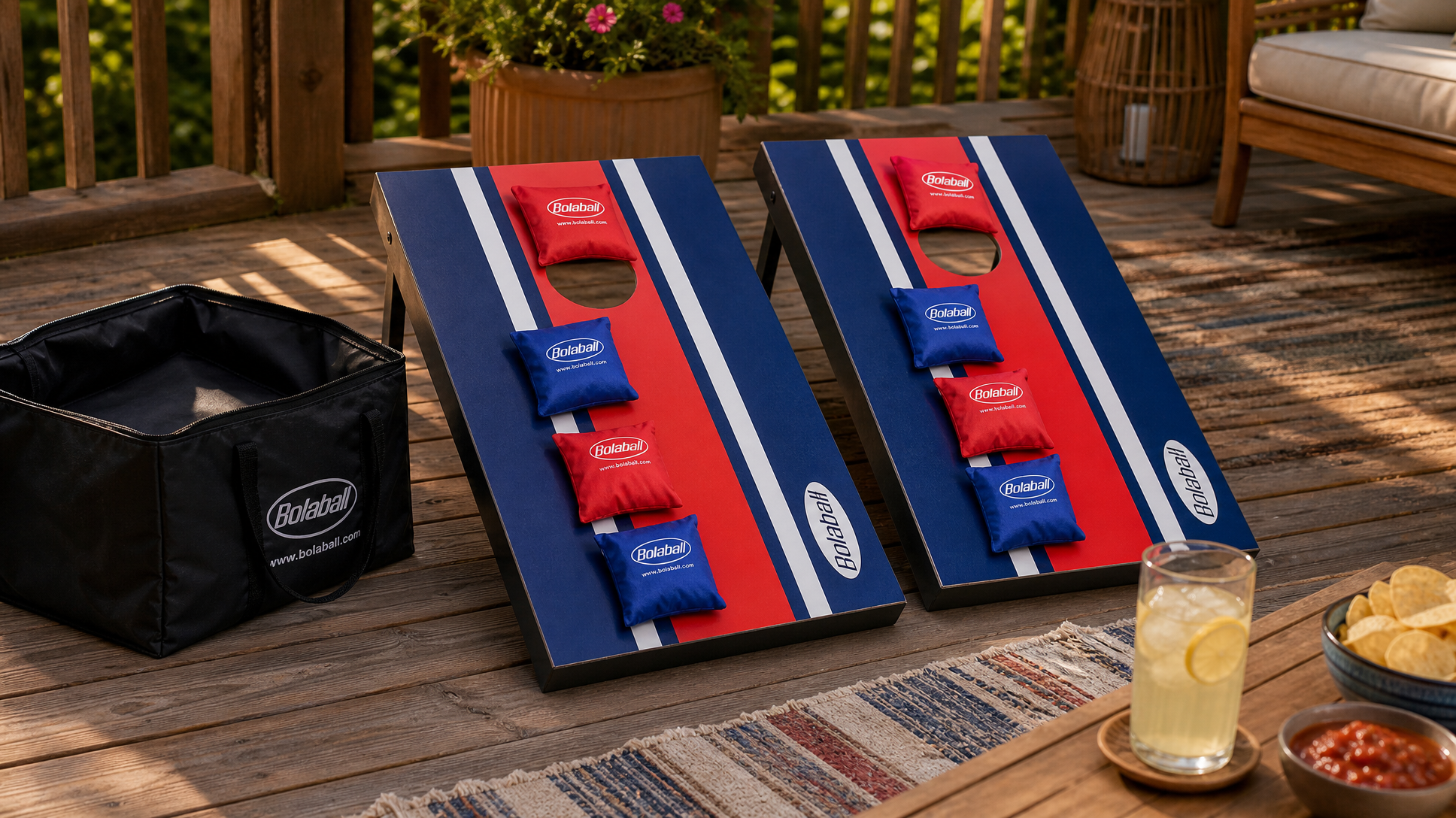
What You Actually Get
The Bolaball set comes with two full-size wooden cornhole boards — that bold navy, red, and white stripe design you can see from across the yard — plus eight canvas bean bags, four red and four blue, with double-sewn seams that hold up to the kind of repeated use kids actually put them through. The bags are firm and toss-ready straight out of the box.
Everything packs into a heavy-duty zippered carry case with the Bolaball logo on the front. That bag matters more than it sounds: it's the reason the set gets taken to the park, the beach, the family reunion, and the tailgate instead of sitting in a corner of the garage. Portability is what turns a backyard game into a family tradition.
The Backyard Game That Doesn't Get Outgrown
At five, your kid is thrilled to land a bag anywhere near the board. At eight, they're trying to knock your bags off. At twelve, they're trash-talking and keeping score with the same focus they'd bring to any competitive game. The boards don't change. The rules don't change. What changes is how seriously they take it — and that's exactly what you want from something you're going to store in that carry case for the next decade.
Cornhole is one of the genuinely short lists of outdoor games that adults enjoy just as much as kids, which means you're not sitting on the sidelines supervising. You're playing. That's the version of backyard time worth buying for.
Ready to make it happen? See the Bolaball Cornhole Board Set — two full-size boards, eight bags, and a carry case ready for your next backyard afternoon.
Frequently Asked Questions
What age is cornhole appropriate for?
Most kids can start enjoying cornhole around age four or five — the toss mechanic is simple enough that they pick it up quickly. By moving the boards closer together, even younger children can land bags and feel successful. As kids get older and their arm strength and coordination improve, you just increase the throwing distance to keep it challenging.
How do you adjust cornhole for younger kids?
The easiest adjustment is simply shortening the distance between the two boards. Younger kids can play from just a few feet away and still experience the full game — landing bags on the board, scoring points, competing with family members. No rule changes needed, just a shorter toss line. As they grow, move the boards back to a longer distance.
Is a wooden cornhole set worth it over a plastic one?
For long-term family use, yes. Plastic boards tend to warp and crack over time, and they flex when bags land on them — which affects how the bags slide across the surface. A solid wood board holds its shape season after season and gives you the consistent playing surface that makes cornhole actually satisfying. If you're buying a set your family will use for years, wood construction is the better investment.
Can you play cornhole indoors?
You can, as long as you have enough floor space. A large living room, basement, or garage works well for indoor play, especially on rainy days. The boards fold flat for easy storage when you're done, and the carry case keeps everything together so you can move the set in and out without hassle.